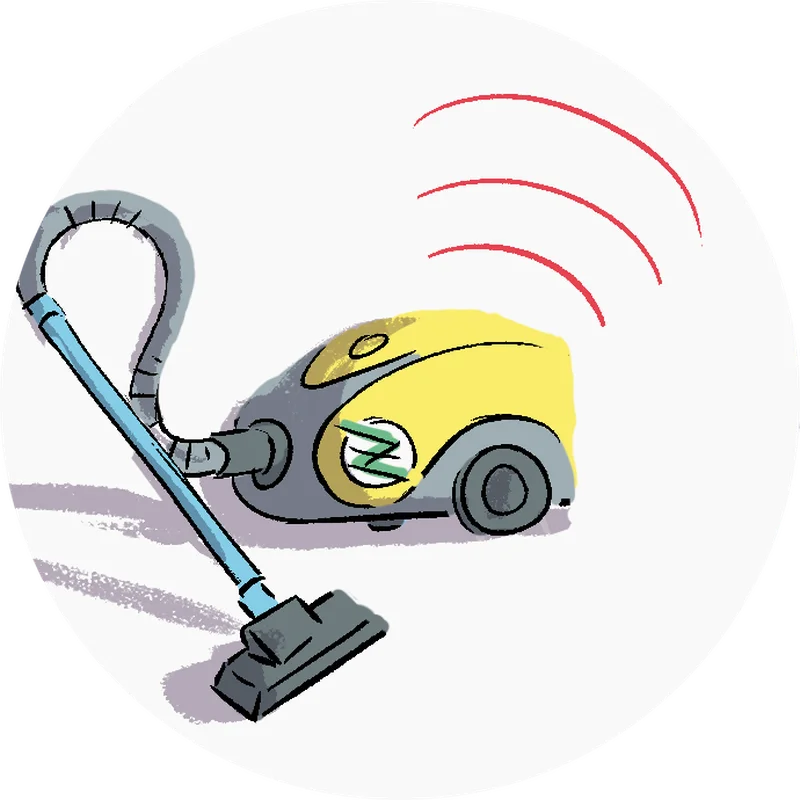
Room volume only*Illustration: from the film “Ada & Zangemann” (FSFE, animated by Monströös), CC BY-SA
Zangemann Speaker “Ear Wonder”
Name a song – and it plays.
Price: 7979gold coins*
Zangemann account included, obedience not included
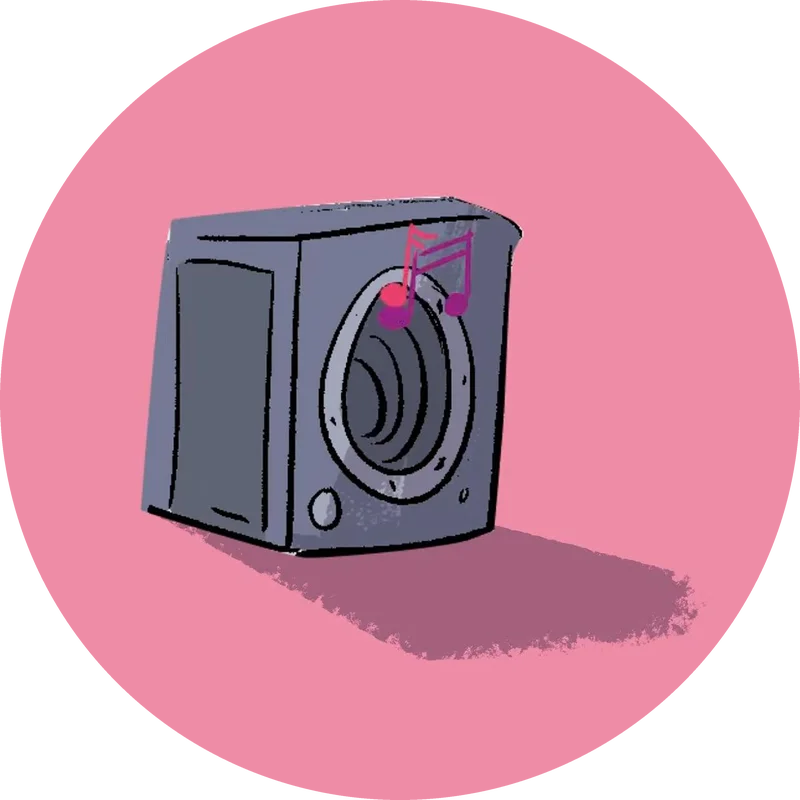
Just name a song and this speaker plays it. In the schoolyard, in the park or in your bedroom: with the Zangemann speaker, your music is always with you.
What it does
Plays any song on command
Volume regulated automatically
Comes preloaded with Zangemann’s personal favourite music
* The fine print
Excerpt from the Zangemann terms of use, version of last night
§ 5 Music is played at room volume only. Exempt is Zangemann’s favourite music, which may be played at full volume at any time. Within Zangemann’s earshot, the speaker automatically plays nothing else. Purchased songs may be deleted remotely at any time; the purchase price will be refunded in gold coins.
On his walk, loud music from one of his own speakers gives Zangemann a headache. That night he orders all speakers to play music at room volume only – except for his favourite music. Later, within his earshot, they may play nothing but his pompous march music.
Does this exist in real life?
Reality check
Music, films and books you buy often don’t really belong to you. Digital Restrictions Management (DRM) decides where, how and for how long something may be played. And if a device only talks to its manufacturer’s cloud, it falls silent along with it.
Music CDs that secretly tampered with computers
For anyone who has never seen a CD: it’s a shiny disc with music on it, an album you can hold. You put it in a player, and it played – no account needed. In 2005, security researcher Mark Russinovich discovered that Sony BMG music CDs secretly installed a so-called rootkit when played on a computer. It was meant to prevent copying, hid deep in the operating system, opened security holes for other malware and reported listening habits back to Sony. After a worldwide outcry, Sony BMG had to recall CDs and settle several lawsuits.
In July 2009, Amazon deleted digital copies of George Orwell’s “1984” and “Animal Farm” from its customers’ Kindle e-readers – without warning. A seller had offered the books in the Kindle store without holding the rights. Amazon refunded the purchase price, but the books were gone. Of all books, “1984”: a novel about a state that makes inconvenient texts vanish without a trace.
The talking robot Moxie went on sale in 2020 to help children practise social and emotional skills. On its website, the maker Embodied wrote that parents had reported Moxie helped their child on the autism spectrum to “better regulate their emotions” and gain self-confidence. Moxie cost around 800 dollars, but its mind ran entirely in the cloud. When Embodied went bust in December 2024, the robots fell silent. Many parents had to explain to their children why their friend no longer answered.